Can a Woman Get Abortion Pills in States With Abortion Bans? A Plain-English Guide for 2026
The short answer
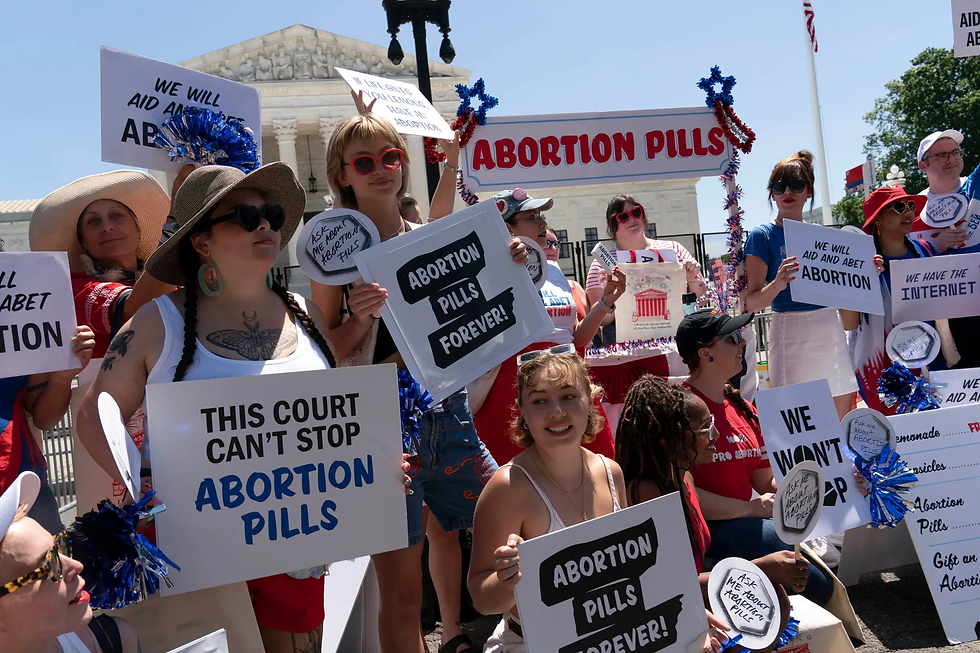
Yes, it is still possible for many women to get abortion pills while living in a state with an abortion ban. The path is not simple, and the law keeps changing. Below is how it works, what the risks are, and what to watch for.
What are abortion pills?
Medication abortion uses two drugs:
Mifepristone blocks the hormone progesterone, which a pregnancy needs to continue.
Misoprostol causes the uterus to cramp and empty.
In the U.S., the FDA has approved this regimen for early pregnancy, generally up to 10 weeks (70 days). Both drugs are also used for miscarriage care. Because of this, the same pills are prescribed for many reasons other than ending a pregnancy.
Where do abortion bans stand?
After the Supreme Court overturned Roe v. Wade in 2022, states could set their own rules. Thirteen states currently have near-total abortion bans. Other states have early limits, such as six-week bans, or extra rules on pills. Where you live matters a great deal. stateline
How are people getting pills in ban states?
1. Telehealth from a "shield law" state
This is the main route. Doctors and nurse practitioners in states where abortion is legal can hold a video or online visit, or review a questionnaire, and then mail pills to a patient. Many telehealth providers say they rely on FDA approval and their own state's shield laws when they offer pills across state lines. 19thnews
What is a shield law? It is a state law that protects abortion providers, and sometimes patients and helpers, from legal action by other states. Massachusetts's law, for example, gives providers some protection from criminal prosecution, civil claims, and extradition. Eight states now have shield laws that explicitly cover telehealth care no matter where the patient is located. NPRCNN
The scale is large. Guttmacher estimates that about 91,000 telehealth abortions were provided under shield laws to people in total-ban states in 2025. More broadly, an estimated one in four abortions in the U.S. now happens through telehealth. CNNkff
2. Traveling to another state
Some people drive or fly to a state where abortion is legal and get care in person. Tens of thousands still do, but the number is falling as telehealth grows. CNN
3. Other sources
Some people order pills from other sources, including online pharmacies based abroad. This comes with more uncertainty. Shipments can be delayed or intercepted, and it can be hard to confirm what you are getting. Talk to a clinician or hotline before using pills from an unverified source.
What happened in court in 2026?
The last few months have been chaotic, so here is the timeline:
May 1, 2026: In a case brought by Louisiana, a federal appeals court temporarily reinstated a nationwide requirement that abortion pills be obtained in person. Access by mail was suddenly in doubt everywhere, including in states where abortion is legal. CNN
May 4, 2026: The Supreme Court paused that ruling after the drug's manufacturers appealed. theconversation
May 14, 2026: The Supreme Court left the FDA's rule in place, so mifepristone can still be prescribed by telehealth and mailed. theconversation
This is not a final decision. The case goes back to the lower court and may well reach the Supreme Court again. Access could change with little warning. theconversation
During the May confusion, some providers said they would continue telemedicine care using a different protocol with higher doses of misoprostol and no mifepristone. That shows how quickly providers adapt. NPR
What are the legal risks?
For providers
Ban states are pushing back hard.
Louisiana indicted a New York doctor for allegedly providing abortion pills by telehealth to a Louisiana teenager. guttmacher
Texas's House Bill 7 lets private citizens sue anyone who mails, prescribes, or provides abortion pills to people in Texas, with a minimum penalty of $100,000. 19thnews
Republican attorneys general from 15 states have asked Congress to pass a law that would override shield laws. yahoo
So far, shield laws have protected doctors targeted in these cases. Still, whether one state can shield a provider from another state's abortion laws is an unsettled area of law. msmagazineNewsweek
For patients
This is the question most women worry about. Laws vary by state, but a few points matter:
Many state bans focus on the people who provide abortions, not the pregnant person. Texas's HB 7, for example, does not allow lawsuits against people who order or use abortion pills. newsfromthestates
That is not true everywhere, and it can change. Guttmacher reports that some states are advancing legislation that would punish patients, and Louisiana now classifies mifepristone and misoprostol as controlled substances. guttmacher
Friends, family, or partners who help someone get pills may face more risk in some states than the patient does.
If you are worried, the Repro Legal Helpline (reprolegalhelpline.org) offers free, confidential legal information.
Which states are riskier for patients and helpers?
Where abortion is banned. As of July 2026, 13 states ban abortion: Alabama, Arkansas, Idaho, Indiana, Kentucky, Louisiana, Mississippi, North Dakota, Oklahoma, South Dakota, Tennessee, Texas, and West Virginia. Other states, like Florida, Georgia, Iowa, and South Carolina, limit abortion at about 6 weeks. kffkff
Risk for the pregnant person
Higher risk
Nevada, Oklahoma, and South Carolina. These three states were named by an If/When/How researcher as still having laws that criminalize self-managed abortion. In South Carolina, self-managing your own abortion is a misdemeanor, and assisting someone is a felony. The Repro Legal Helpline says Nevada's law applies only after 24 weeks of pregnancy. Older lists also included Arizona and Delaware, so sources don't fully agree. Check your state's current law. www.npr.org +2
Georgia. No special statute was needed. Police there charged a woman with murder in March 2026 after she allegedly used an abortion pill and the opioid painkiller oxycodone. Fortune
Alabama. Its statute exempts pregnant women, but the Attorney General suggested in 2023 that women could still be prosecuted for taking abortion pills under a chemical endangerment law. cuny
South Carolina, again. A bill that would have criminalized patients narrowly failed in the state Senate in November 2025. Similar bills could return. msmagazine
Lower risk on paper
Alabama, Arkansas, and Texas. Their abortion laws expressly say the patient cannot be criminally charged. In Texas, a district attorney dropped murder charges against a woman after acknowledging that Texas law exempts someone who has an abortion from prosecution. nolotexastribune
Texas's HB 7. People who order or use abortion pills cannot be sued under this law. newsfromthestates
States where abortion is legal. Colorado, for example, defines homicide as applying only to a human being who was born and alive. nolo
The catch: even in "lower risk" states, prosecutors have tried other laws. From 2000 to 2020, people were criminally investigated or arrested for self-managing an abortion, or helping someone do so, in 26 states. Most of those cases involved people who ended pregnancies without a clinician. The Repro Legal Helpline notes that telemedicine is not the same as self-managed abortion, which means ending a pregnancy without a licensed U.S. provider. That difference can matter legally. ifwhenhowreprolegalhelpline
Risk for friends, family, and partners
Higher risk
Texas. HB 7 lets private citizens sue people who mail, transport, deliver, prescribe, or provide abortion pills, with a minimum penalty of $100,000. Ms. Magazine reports that Texans can even sue family and friends who order pills for a patient. 19thnewsmsmagazine
Louisiana. A 2025 law lets a woman seek damages from anyone who knowingly performs or substantially facilitates an abortion, including coordinating the sale of pills. Louisiana also lists mifepristone as a controlled substance. Guttmacher says it was the only state to enact a bill of this kind in 2025. multistate
South Carolina. Assisting is a felony, including by providing drugs. harvardlawreview
Texas, Oklahoma, and Florida. These states already have laws that specifically ban providers from mailing the pills. U.S. News & World Report
Helping a minor. If you help someone under 18 and you are not their legal guardian, the legal risk could be high. Idaho and Tennessee also have "abortion trafficking" laws aimed at helping minors. reprolegalhelpline
Lower risk
Helping an adult use a licensed provider. The Repro Legal Helpline says that helping an adult get pills from a licensed provider in a state where abortion is legally provided carries no legal risk. Texas and Louisiana's civil laws make lawsuits possible anyway, so this is not a guarantee. reprolegalhelpline
Most other states. They have no law aimed at helpers. Prosecutors have still improvised: helpers have been charged with crimes like child abuse or disposing of fetal remains. ifwhenhow
Safety: what to know
Medication abortion in early pregnancy is considered safe and effective by major medical organizations. Some basics:
Confirm how far along you are. The pills are approved for early pregnancy, and timing affects safety.
Know the warning signs. Seek emergency care for very heavy bleeding (soaking through two or more thick pads an hour for two hours), severe pain that does not ease, or fever that lasts more than a day.
Emergency rooms. The symptoms look the same as a miscarriage. Clinician-run hotlines like the Miscarriage and Abortion Hotline (833-246-2632) can explain how to talk to emergency staff and answer medical questions confidentially.
Use trusted sources. Get pills from a licensed provider or a verified organization, not an anonymous seller.
Where to find reliable information
Plan C (plancpills.org): a guide to finding pill providers, with information on which are reputable.
Aid Access (aidaccess.org) and the Massachusetts Medication Abortion Project: telehealth providers that have served patients in ban states.
Miscarriage and Abortion Hotline: free medical support from clinicians, 833-246-2632.
Repro Legal Helpline: free legal information, reprolegalhelpline.org.
Abortion funds: many groups help with costs of pills, travel, or lodging.
Frequently asked questions
Is it legal to get abortion pills if I live in a ban state?It depends on the state and the situation. Providers in shield law states say their care is legal where they practice. Ban states say it violates their laws. Courts have not fully settled this.
Can I be arrested for taking abortion pills?Most bans target providers, but a few states have moved toward penalties for patients. Check your state's current law or call a legal helpline.
Is mailed medication abortion safe?Major medical groups say medication abortion is safe and effective in early pregnancy, whether the pills are dispensed in person or by mail after a telehealth visit.
Will access change soon?Possibly. The Louisiana case is still going, and other lawsuits and state laws could affect access. Check a current source, such as Plan C or the Guttmacher Institute, before you rely on any route.
The bottom line
In 2026, abortion pills remain reachable for many women in ban states, mainly through telehealth providers protected by shield laws. That access is being challenged in court and in state legislatures, and the rules can change from month to month. If you or someone you know needs this care, start with trusted, up-to-date sources, get medical guidance, and consider legal information before you decide.
Comments