When the President's Own Posts Move Markets — And He's Selling Early Access to Them
The setup, in plain terms
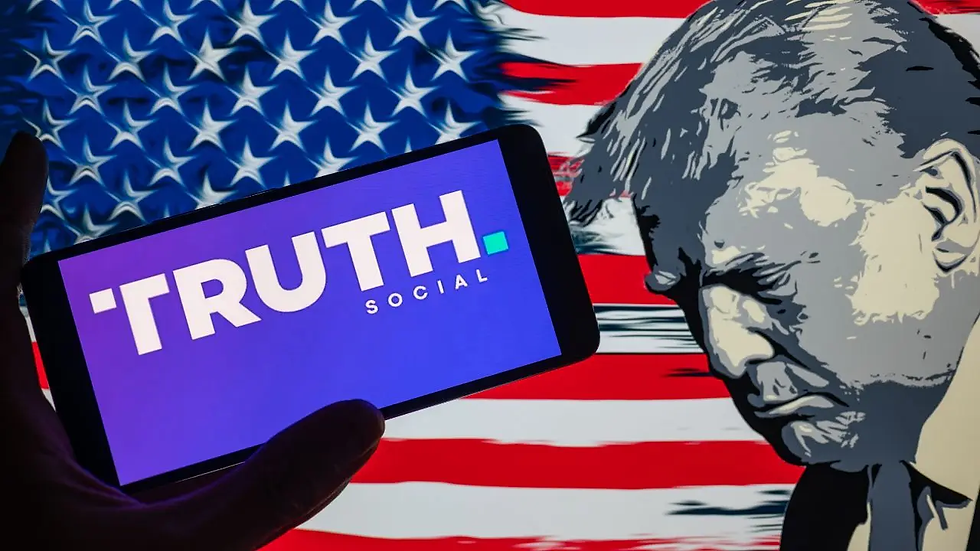
On August 1, 2026, Trump Media & Technology Group turned on a paid product called Truth API. For a subscription reported at up to $100,000 a month, trading firms get real-time, machine-readable access to posts from about 10 high-profile Truth Social accounts — President Trump's included — often milliseconds after they're published, and ahead of anyone reading the app for free. Company executives have pitched it plainly as a way to monetize the platform's most market-moving content, and said more than ten customers signed contracts within weeks of launch.
Here's the part that makes this different from an ordinary data licensing deal: Trump routinely uses that same account to announce or hint at decisions on tariffs, foreign policy, energy, and individual companies — the kind of statements that immediately move stock, currency, and commodity prices. And Trump owns roughly 41% of Trump Media through a revocable trust, so a meaningful share of every subscription dollar flows back to him personally. Put those two facts together and you get the actual question people are wrestling with: can a president profit personally from selling paying customers a speed advantage on his own official statements?
This isn't a hypothetical — it's already a live fight in Washington
The reaction split almost immediately along predictable lines, with a few notable exceptions.
Democratic lawmakers moved fast. Rep. Angie Craig sent a letter to the Acting Attorney General and the SEC calling Truth API a blatant insider trading scheme that would let the president profit personally by giving Wall Street early access to information on his own platform. Rep. Ritchie Torres separately wrote to SEC Chairman Paul Atkins, arguing there's a meaningful distinction between an ordinary company licensing data and a firm substantially owned by the sitting president selling traders faster access to his market-moving policy statements. Senators Elizabeth Warren and Adam Schiff asked the SEC directly to investigate, calling it an abuse of the presidency for personal benefit that undermines everyday investors and market integrity. Senate Minority Leader Chuck Schumer went further in public remarks, calling it flatly "the definition of insider trading."
What's notable is that the concern didn't stay entirely on one side of the aisle. Senate Majority Leader John Thune, a Republican, told reporters he assumed the product would draw some regulatory and legal scrutiny, adding that it was genuinely new legal territory. And NPR quoted an anonymous Wall Street executive who put it more bluntly: "in another administration, this would be considered criminal."
Trump Media's response has been consistent and unapologetic. Company spokeswoman Shannon Devine has said Truth API simply offers the fastest way to access Truth Social data that's already public and dismissed the insider-trading framing as something critics invented despite the information being publicly available. In a later statement she characterized the political pressure campaign as certain politicians accusing the company of anti-free-market behavior while pushing to boycott a public company. As of this writing, the SEC has confirmed it received the lawmakers' letters but declined to say whether it's opening a formal investigation.
So — is it actually insider trading?
Here's where it gets genuinely complicated, and where a lot of the loudest commentary skips past the hard part.
Classic insider trading law doesn't map cleanly onto this. Federal insider-trading rules (built on Rule 10b-5 of the Securities Exchange Act) generally punish trading on material, nonpublic information, or tipping someone else to do so, in breach of a duty of trust. Trump isn't trading securities himself, and the posts aren't secret — they're published to the entire public simultaneously, just distributed at different speeds to different tiers of paying customers. That's a real distinction, and it's the one Trump Media leans on.
The STOCK Act is closer, but still an awkward fit. The 2012 Stop Trading on Congressional Knowledge Act explicitly bars the president and executive branch officials from trading on privileged information gained through their position. A securities-law expert interviewed by NPR pointed to the STOCK Act as the relevant statute, while also noting the obvious defense: because the information goes out openly rather than secretly, Trump's lawyers can argue there's no deception involved — and deception is usually central to a fraud claim. The Act was written for officials quietly trading ahead of news, not for a president selling speed on news he's simultaneously making public.
There's actually a closer precedent — and it wasn't prosecuted as insider trading either. In 2013, New York's attorney general investigated Thomson Reuters for selling high-frequency traders a two-second head start on the University of Michigan's closely watched consumer sentiment survey, before the same data reached its other subscribers. The attorney general called this pattern "Insider Trading 2.0" — legal under the classic definition, but corrosive to the idea of a level playing field. The case never turned into a criminal insider-trading prosecution. It was investigated under New York's Martin Act, a state fraud law, and resolved when Thomson Reuters voluntarily dropped the practice under regulatory and congressional pressure — Senator Chuck Grassley opened his own inquiry — and the University of Michigan eventually moved its distribution deal to Bloomberg, which agreed not to offer paid early access at all.
That case is the clearest real-world analogue to Truth API, and it's worth sitting with what it actually shows: paying for a speed advantage on market-moving information wasn't found to be a crime. It was treated as a fairness problem serious enough that public and political pressure shut it down anyway, without anyone needing to prove fraud in court.
What makes Truth API a harder case than Thomson Reuters
The 2013 episode involved a neutral data company distributing someone else's survey early. Truth API involves something structurally different: the person making the market-moving statements, the platform distributing them, and the company profiting from selling speed on them are all, in effect, the same person. Thomson Reuters didn't write the University of Michigan's survey results. Trump writes the posts Truth API sells early access to, and he owns a large stake in the company selling that access. Rep. Torres's letter to the SEC makes exactly this point — that a company substantially owned by a sitting president selling faster access to his own policy announcements isn't really the same category of thing as a data vendor licensing someone else's information.
That's also why this doesn't fit neatly under the emoluments clauses in the Constitution, which mostly concern payments from foreign governments or compensation from the U.S. government itself — this is domestic, private commercial revenue. And it's worth knowing that the president and vice president are, by long-standing interpretation, exempt from the general federal conflict-of-interest statute (18 U.S.C. § 208) that bars other executive branch officials from financial dealings that could benefit from their official duties. That exemption is a big part of why past presidents relied on divestment or blind trusts as a norm, not a hard legal requirement — and why Trump Media's arrangement, whatever the SEC ultimately decides, sits in a genuine gap between "clearly illegal" and "clearly fine."
Legal versus appropriate — two different questions
It's worth separating these cleanly, because they get collapsed together constantly in coverage of this story:
Is it illegal? Unresolved. No agency has announced an investigation is underway, no charges have been filed, and the legal theories being floated (STOCK Act, general securities fraud, market manipulation) all have real gaps when applied to information that's technically public. Thune's "new territory" comment is probably the most accurate one-line summary available right now.
Is it a conflict of interest? Much harder to argue against. A sitting president stands to personally profit, through a company he substantially owns, from statements he makes in his official capacity that move markets. Whether or not any statute technically prohibits that arrangement, it's the kind of thing conflict-of-interest rules exist to prevent — it's just that those rules were largely written with the assumption that a president wouldn't run a commercial business selling access to his own official communications in the first place.
Where this likely goes
Based on the Thomson Reuters precedent, the more probable outcome isn't a dramatic prosecution — it's sustained political, media, and reputational pressure, possibly combined with an SEC inquiry that never becomes public in detail, that either forces changes to the product or fizzles out depending on how much appetite regulators have to test genuinely novel legal ground against a sitting president's own company. Congress can also act directly: nothing stops lawmakers from writing a new statute that explicitly closes this gap, the way the STOCK Act itself was written in response to a public outcry over congressional trading. Whether that happens is, unsurprisingly, itself a political question tied to which party controls Congress.
What's not really in dispute, across both the critics and the company's own defenders, is that nobody has done exactly this before. A president whose casual social media posts move markets, selling paid millisecond access to those same posts through a company he owns, is a new kind of arrangement — and the laws written for insider trading, congressional stock trades, and data licensing were each built for a narrower, more conventional version of the problem than the one actually sitting in front of regulators right now.



Comments