Supreme Court Judgment on Sedition Law: What It Means for You
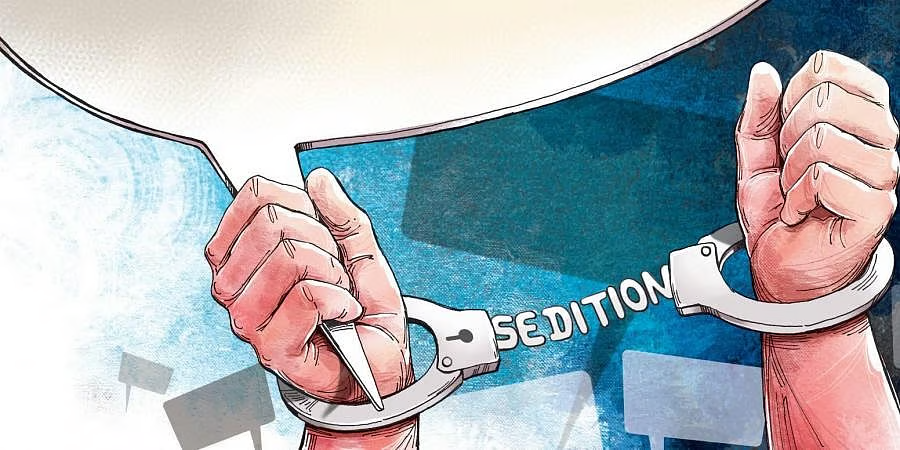
If you've followed the news over the last few years, you've probably seen the word "sedition" pop up again and again — in reports about journalists, activists, students, and even ordinary citizens booked for something they said or posted online. And somewhere in that same stream of headlines, you've probably also seen "Supreme Court" attached to it.
So, what exactly did the Supreme Court decide? Is sedition still a crime in India? Can the police still arrest someone under this law today? The honest answer is a little more layered than a single headline can capture — and that's exactly what this article is here to sort out.
First, What Is the Sedition Law?
Sedition in India comes from Section 124A of the Indian Penal Code (IPC), a law that punished anyone who tried to "bring into hatred or contempt" or "excite disaffection" towards the government. The punishment could stretch all the way to life imprisonment.
This wasn't a law independent India wrote for itself. The British drafted it in 1870, largely to silence people who spoke against colonial rule. Bal Gangadhar Tilak was convicted under it. So was Mahatma Gandhi, who once told a court during his own sedition trial that he considered it "the prince among the political sections of the Indian Penal Code designed to suppress the liberty of the citizen."
After Independence, nobody repealed it. It stayed on the books, and over the decades it kept getting used — against politicians, cartoonists, students, farmers protesting new laws, and journalists covering all of the above.
The 1962 Case That Set the Rules: Kedar Nath Singh
Long before the recent controversy, the Supreme Court had already looked at Section 124A once, in 1962, in a case called Kedar Nath Singh v. State of Bihar. A five-judge bench upheld the law as constitutional, but it added an important limit: criticising the government, however sharply worded, is not sedition. Only speech that incites violence or public disorder qualifies.
In theory, that should have protected most political criticism. In practice, it didn't work out that way. Police across the country kept filing sedition cases against people for cartoons, slogans, tweets, and opinion pieces that had nothing to do with inciting violence. Convictions were rare — data from the National Crime Records Bureau has repeatedly shown that very few sedition cases ever end in a guilty verdict — but the arrest, the FIR, and the months or years of trial were punishment enough for many.
2022: The Order That Changed Everything
By 2021, the Supreme Court itself was visibly uneasy about this. In one hearing, then Chief Justice N.V. Ramana compared Section 124A to "a saw in the hands of a carpenter to cut a piece of wood," used instead "to cut the entire forest." The Court asked the central government directly why a colonial-era law once used to jail Gandhi and Tilak still existed in independent India.
The government's response, after initially defending the law, was to tell the Court it wanted to review the provision itself. On the back of that, the Supreme Court passed its most significant order on the subject on 11 May 2022, in S.G. Vombatkere v. Union of India. The bench, led by CJI Ramana, ordered that:
No fresh FIRs would be registered under Section 124A until the review was complete.
All pending trials, appeals, and proceedings under the section would be kept on hold.
Anyone already in jail under a sedition charge could approach the courts for bail.
States were encouraged not to invoke the section at all during this period.
This was unusual. Courts don't often suspend an entire section of a criminal law while a case about it is still pending — they normally rule on constitutionality and leave it at that. The 2022 order effectively froze the law in place without striking it down, which is why it's often misreported as "sedition being abolished." It wasn't. Section 124A still existed; it just couldn't be actively used.
2023: Sent to a Larger Bench
The next big step came in September 2023. A three-judge bench led by CJI D.Y. Chandrachud decided that the actual question — whether Section 124A violates the Constitution — was too big for a bench of three judges to answer, since the 1962 Kedar Nath Singh ruling had come from a bench of five. You generally need an equal or larger bench to revisit an earlier Constitution Bench decision.
The Court also made a point worth remembering it rejected the government's request to simply wait for the new criminal laws to replace the old sedition provision. Even if Parliament repealed Section 124A going forward, the Court said, that wouldn't automatically resolve the thousands of pending FIRs and trials still sitting under the old law. Someone would still have to decide whether the underlying charge was constitutional in the first place.
That reference to a Constitution Bench is still pending today.
Enter Section 152 BNS: Old Wine, New Bottle?
While the case sat with the courts, Parliament went ahead and replaced the IPC entirely. From 1 July 2024, the Bharatiya Nyaya Sanhita (BNS), 2023 took over as India's main criminal code, and Section 124A was formally repealed.
But the word "sedition" disappearing from the statute book didn't mean the idea disappeared with it. Section 152 of the BNS criminalizes acts that "endanger the sovereignty, unity and integrity of India" through secession, armed rebellion, subversive activities, or encouraging separatist feelings — carrying the same maximum sentence of life imprisonment.
Petitioners, including the same S.G. Vombatkere who had challenged Section 124A, weren't convinced this counted as reform. Their argument, put simply: you can rename a provision and drop the word "sedition," but if the actual behavior it punishes — criticism the government finds uncomfortable — hasn't changed, the constitutional problem hasn't gone anywhere either.
In August 2025, the Supreme Court agreed there was a case to answer and issued notice on a petition challenging Section 152 BNS. Around the same time, real cases were already testing the provision. Journalist Abhisar Sharma faced an FIR under Section 152 after a video criticizing land allotments in Assam. The Wire's founding editor Siddharth Varadarajan and consulting editor Karan Thapar were booked over a published article, also in Assam, and the Supreme Court had to step in to protect them from arrest while questioning whether the potential for misuse itself could make the provision unconstitutional.
Where Things Stand in 2026
As of now, here's the honest state of play:
The constitutional validity of both Section 124A (for old cases still pending trial) and Section 152 BNS (for cases registered after July 2024) remains undecided. The Constitution Bench has not yet delivered a final verdict on either.
In May 2026, the Supreme Court issued a clarification on a narrower, practical question: what happens to sedition trials that were already underway before the 2022 abeyance order? The Court said these pending trials and appeals may continue, but only where the accused person does not object. This wasn't a ruling on whether sedition itself is constitutional — it was a housekeeping decision aimed at unclogging a backlog of half-finished cases that had been stuck in limbo for years.
So, if you're wondering "is sedition legal in India right now" — the accurate answer is: the underlying question is still open. Section 124A can't be used for fresh cases. Section 152 BNS technically can be, and is being used, but it's under active judicial scrutiny, and courts have shown a willingness to step in and protect individuals from what look like overreaching FIRs while the bigger constitutional question is sorted out.
Why This Actually Matters to You
It's easy to treat this as a story about journalists and activists in the news, but the questions the Court is wrestling with affect anyone who posts, writes, or speaks publicly — a college student sharing a strongly worded opinion online, a local reporter covering a protest, a citizen complaining about a state government on social media.
Two constitutional rights are pulling against each other here. Article 19(1)(a) guarantees freedom of speech and expression. Article 19(2) allows the state to place "reasonable restrictions" on that freedom in the interest of India's sovereignty, security, and public order. Nobody seriously disputes that a country needs laws against incitement to violence or genuine threats to national unity. The disagreement is over how loosely that line gets drawn in practice — and how much damage a wrongly filed FIR does to someone's life even before a court gets around to deciding they were never guilty of anything.
A Quick Comparison: Then vs Now
Section 124A, IPC (1870–2024) | Section 152, BNS (2024–present) | |
Uses the word "sedition" | Yes | No |
Maximum punishment | Life imprisonment | Life imprisonment |
Status | Repealed, but old cases still pending | In force, under Supreme Court challenge |
Current SC position | In abeyance since May 2022; old trials may resume with accused's consent | Constitutional validity pending before the Court; individual protection granted in specific cases |
The Bottom Line
There has been no single, final "Supreme Court judgment" that settled the sedition question once and for all — despite how it's sometimes reported. What exists instead is a slow, still-unfinished process: a 2022 order that pressed pause on Section 124A, a 2023 reference to a larger bench that hasn't yet ruled, and a fresh challenge to its successor, Section 152 BNS, that's now working its way through the same court.
For now, the safest thing to say is this: the law that replaced sedition is on the books and is being enforced in some states, but it's being watched closely by the very court that will eventually decide its fate. Until that Constitution Bench delivers its verdict, this remains one of the most closely tracked pending matters in Indian constitutional law — and worth keeping an eye on if you care about where the line between criticism and crime actually sits.


Comments